The key to healthy tapirs: why fiber makes all the difference
Tapirs may not be the first animals that come to mind when thinking about specialized nutrition, but appearances can be deceiving. Behind their calm and gentle nature lies a highly sensitive digestive system. And that’s exactly where an important challenge arises for zoos and feed producers alike.
Picky eaters with sensitive digestion
Did you know that tapirs are very selective when it comes to fiber? As hindgut fermenters, they rely heavily on fiber-rich diets to keep their digestive systems functioning properly. In the wild, their diet mainly consists of leaves, twigs, and other coarse plant materials.
However, studies and practical experience show that tapirs in zoos often receive less fiber than they actually need. Some diets even contain less than 25% fiber—while this component is essential for maintaining stable gut health.
The challenge: hay is often rejected
An additional complication is that tapirs frequently refuse grass hay. This makes it difficult to provide sufficient structural fiber through traditional feed sources. As a result, zoos become highly dependent on specially formulated feeds that are both nutritious and palatable.

The solution: smartly formulated tapir feed
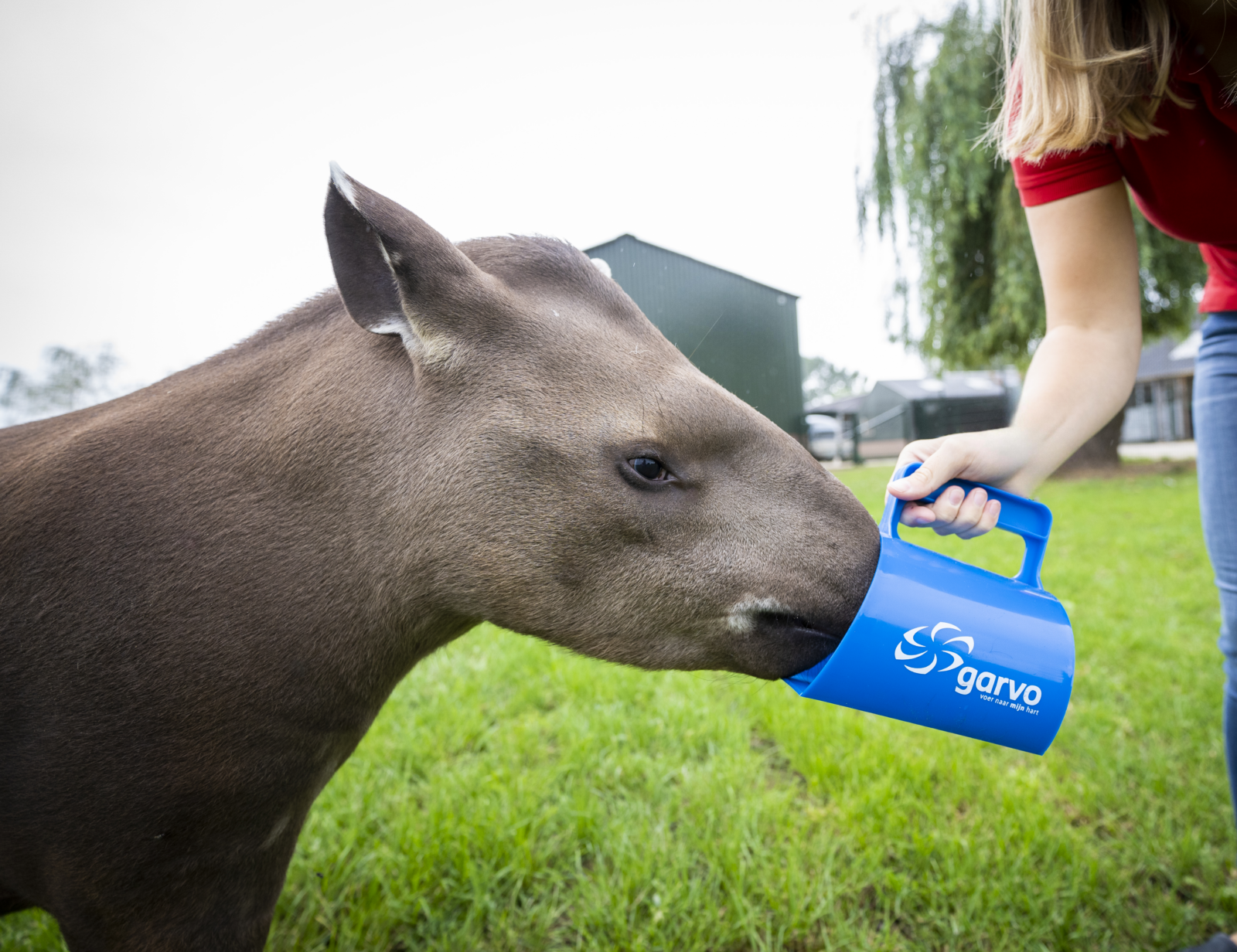
This is where Garvo animal feed steps in with a specially developed tapir diet that closely matches the animals’ natural feeding habits. What makes this feed stand out?
- High fiber content (NDF ~47%)
- Low starch content (~6.7%)
This balance helps ensure that tapirs receive the nutrients they need to support their digestive health.
Why this balance matters
A proper ratio of fiber to starch has a major impact on the health of tapirs. It contributes to:
- healthy gut function
- stable hindgut fermentation
- prevention of digestive disorders
In short, fiber isn’t just part of the diet—it’s the foundation of a healthy tapir.
What does NDF actually mean?
NDF stands for Neutral Detergent Fiber. It measures the total amount of structural fiber in feed, such as cellulose and lignin. These fibers are crucial for a well-functioning digestive system, especially in animals like tapirs.
In conclusion
Feeding tapirs is about more than simply providing enough food. It’s about the right composition, tailored to their natural needs. With the right balance of fiber and starch, zoos can truly make a difference in the health and wellbeing of these remarkable animals.
Because when it comes to tapirs: the right fiber means a healthier animal.
Interested? Feel free to contact us and ask about the 6008 grain-free tapir pellet.