A visit to Harms Farm
On 11 March 2019, I paid a visit to Harm Brinkman, the proud owner of genuine Garvo chickens. He keeps Wyandottes, Booted Bantam and Silkies, and has been feeding them Garvo feed for years. As I walk into the garden, I can immediately see that this is yet another typical example of a true animal lover who looks after his chickens very well. The chicken coops look lovely, everything is spotlessly clean, and the chickens are happily scratching about despite the changeable weather.
English subtitles are available on YouTube under ‘Settings’.
Caring for and housing chickens
Harm is studying Animal Care himself and hopes to be able to teach this subject in the future. As far as I’m concerned, he’s already more than qualified for this, as he’s managed to tell me a great deal within the time of the film. For instance, he explains to me that it’s important for chickens that:
• There is enough space for every chicken
• There is an indoor coop where the chickens can take shelter
• There are perches at different heights to reflect the pecking order
• There is a nesting box for the eggs
• Food and water are provided
For more information on what you need to look after chickens, we’d definitely recommend this blog!
A complete feed therefore means you don’t need to add anything else
For years, Harm has been keeping his chickens happy with Garvo’s 5033 Alfamix Chicken (formerly known as Farmyard Mixture). “The chickens thrive on it, and because it’s a complete feed, you don’t need to add anything else.” It’s not just the chickens that sneak a nibble – the rabbit that roams around the coop also likes to have a go. “But,” Harm adds, “as well as chicken feed, the rabbit gets proper rabbit feed, of course.”
“I always get the feed here at Tijhof in Enter. André happens to be my neighbour too, so we’ve known each other for years, but I enjoy visiting his shop.”
So we couldn’t resist popping round and giving Harm a bag as a thank-you for letting us come and film. Once we’d picked up the feed, the chickens were immediately treated to it again.
Booted Bantam and Seramas
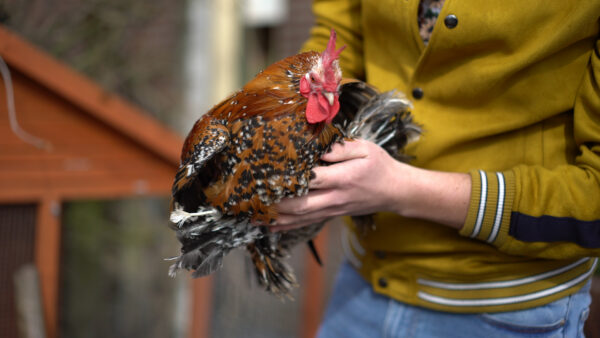
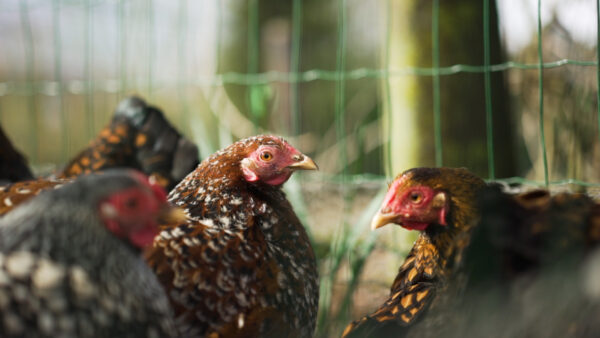
Harm soon takes me to the first coop, where we see several Booted Bantams in the lemon colour variety and a Serama hen. When I ask why he wanted Booted Bantam, he replies that he thinks it’s a beautiful breed and really likes the feathers on their legs.
Silkies
As for the Silkies which, to me, initially look very different from the other chickens, Harm has both the bantam and the full-sized varieties. It had been raining heavily over the past few days, and on the day of filming itself too. Silkies don’t cope well with the rain, so they’re kept in a covered run. We ourselves also had to dash indoors every now and then to avoid getting soaked to the skin.
Wyandottes
What’s life like for a Wyandotte? I gather it’s a very laid-back existence. When they’re awake, they forage for food, take a dust bath and cluck away happily together before returning to their perches. What a life!
“I’ve got the rabbits here purely for breeding, and the chickens purely for the fun of it.”
After we’ve had a good look at all the chicken breeds and are tired from running back and forth to keep the camera from getting waterlogged, we both look back on the day with satisfaction. Of course, the baby rabbits had to be shown off too. If you’d like to see more of this or learn about looking after chickens, do check out Harms Farm’s Facebook page. An educational day full of well-cared-for and healthy-looking animals.
Until the next feeding story!