RACING PIGEONS | Critters, critters, all kinds of critters
Every pigeon enthusiast has experienced it at least once. Confidently, you open a bag of feed to use the beautiful mix. And to your surprise, something is wrong. Dust in the feed bag, cobwebs, moths, or all kinds of small black beetles doing their best to escape from the bag…
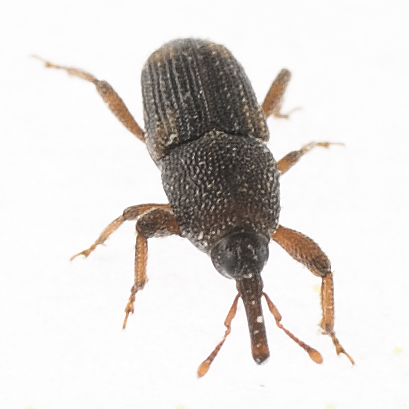
In short: you are left with an (expensive) purchased bag of feed that does not meet expectations. What to do? Return it to the supplier, not being understood, the expiration date on the bag has not yet passed, misunderstanding, stress, confusion. It is a situation no one would like to experience. And yet, it seems to be occurring more and more often.
It is also a circumstance that we, as a feed supplier, would rather not experience. For many years we have been doing our very best to prevent pigeon fanciers from being confronted with this. Increasingly strict incoming inspections, screening of raw material suppliers. Everything possible is being done.
Farmers grow grains and pulses in the fields, which are harvested during harvest time and stored in silos. A silo is thoroughly cleaned before storing the new harvest and freed from all residues of the previous crop, and checked for pests. If necessary, the silo is treated with an insecticide to kill any insects present. So far, everything seems to be going well. In case of emergencies, methods were available to treat grains and kill living insects.
For a number of years now, despite all measures, we have seen a rising trend in the presence of pests. Even in batches delivered immediately after harvest, they appear to be present already. It seems as though the challenge grows every year. The reality, however, is that we are dealing with living material in which a true heat treatment is not desirable in order to preserve germination capacity, ever-larger units of storage and processing, fewer possibilities to effectively combat insects, and increasingly strict requirements regarding residues of various chemical agents that are not desired.
Not to mention the average temperature influences a bag of feed may be exposed to before it is emptied into the pigeon loft container. And yes, temperature is one of the greatest allies of insects, stimulating their development. If the average temperature can be kept below approximately 15°C, there is not much to worry about. However, we all know how hot it can get in the pigeon loft or in the feed storage area.
There are several possibilities to control insect development as much as possible. Continuous temperature control is quite a challenge and still does not guarantee success. Gamma irradiation; this kills all life, but the grains also lose their life (i.e., germination capacity), which is not desirable for feed vitality. Autoclaving; where food products are made free of insects in an environmentally friendly way using a CO₂ high-pressure treatment. Or ensuring that insects cannot further develop by creating conditions in which this becomes impossible.
This can be done by controlling the amount of oxygen necessary for insect development by making the packaging airtight and providing it with a protective atmosphere in the form of a gas mixture without oxygen. The risk of insect development is thereby reduced to a minimum.
But the story does not end there. Because while we try to give insects no chance, there is a second, equally important factor: the quality of the feed itself over time. Every pigeon fancier knows that good feed is more than just a nice mix of grains and seeds. It is about nutritional value, smell, taste, intake, and ultimately performance. And precisely these properties are under pressure from the moment the feed is produced.
As soon as feed comes into contact with air, and thus oxygen, a slow but inevitable process begins. Fats react with oxygen, vitamins break down, and freshness gradually declines. This process often goes unnoticed, but the consequences are clear: feed that smells less fresh, is less palatable, and ultimately contributes less to the condition of the pigeon. Compare it to products we use daily. A bag of chips left open too long becomes stale, oily, and loses its taste. The same happens, albeit more subtly, with pigeon feed. We just do not always see it immediately.
This plays an especially important role in high-quality mixes that use oil-rich seeds such as flaxseed, hemp, and peanuts. These ingredients are valuable because of their high energy content and contribution to condition and recovery, but they are also sensitive. When these fats oxidize, not only does nutritional value decrease, but the smell and taste of the feed also change. And that last aspect is particularly important.
Pigeons are selective. Feed that smells or tastes less fresh is simply eaten less readily. And less intake means less energy, less recovery, and ultimately poorer performance. That is why controlling oxygen in the packaging is a logical and effective step. By not simply packaging feed in a bag filled with air, but in a protective atmosphere without oxygen, the oxidation process is strongly slowed down.
The feed remains stable for longer, retains its natural properties, and remains attractive to the pigeon. The principle is simple but effective. Instead of normal air, the packaging is filled with a gas mixture, for example nitrogen and carbon dioxide. These are naturally occurring gases that have no negative influence on the feed but do create conditions in which oxidation and insect development have hardly any chance.
The result is packaging in which the feed is, as it were, “paused” in time. The quality as it leaves the factory is preserved much longer until the moment the bag is opened. This has several advantages. Not only are smell and taste better preserved, but nutrients also remain intact for longer. Vitamins, minerals, and essential fatty acids break down less quickly. The germination capacity of seeds is better preserved, and overall freshness remains at a higher level.
In addition, the previously mentioned insect pressure also plays a role. In an oxygen-free environment, insects can hardly develop. Any eggs or larvae simply do not get the chance to grow. This significantly reduces an important risk during storage and transport. For the pigeon fancier, this mainly means certainty: certainty that the feed he opens truly meets expectations. No surprises, no unwanted insects, and no doubt about quality.
And that is more important than it may seem. Because in pigeon sport, everything revolves around details. The difference between winning and losing often lies in small things. Feed that is absorbed slightly better, provides slightly more energy, or is slightly more digestible can make the difference. Fresh feed plays a key role in this. It supports not only daily condition but also recovery after exertion and preparation for performance. When feed quality declines during storage, the fancier unknowingly loses part of that foundation.
By optimally protecting feed from external influences, energy value remains more stable, essential fatty acids remain available, and palatability remains high. Pigeons extract more from the same amount of feed, which ultimately translates into better performance.
Within the animal feed industry, this packaging method has been known for some time, but within pigeon sport it is still relatively in its infancy. Nevertheless, it is a development that is hard to ignore. The idea of gas-packaging pigeon feed originated from the fact that Garvo has been applying this technique for many years for various types of animal feeds. Often in combination with requirements needed for export. For exports to often warmer countries, it is necessary to better protect products against heat. Products packed under gas appear to be much better protected against mold and pests, especially during transport.
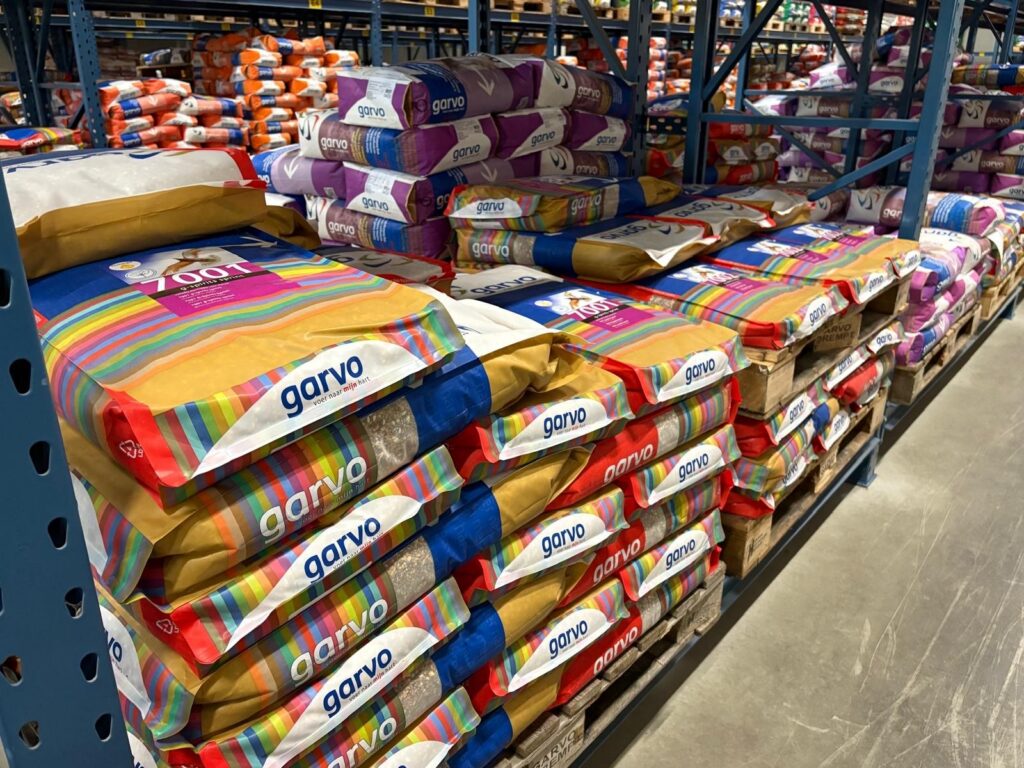
It has also been found that it is not wise to fill bags completely airtight. When stacking bags, the remaining gas cannot escape, causing pressure that risks bursting the bags. By leaving some space in the bags, this risk is reduced. Other feeds are already gas-packed mainly to protect the fats they contain, making them longer lasting during their journey from producer to consumer.
The demands that pigeon fanciers place on quality are increasing, while at the same time challenges in production and storage are growing. Therefore, it is logical to look for solutions that go beyond the traditional approach. Gas packaging is a good example of this. Not a miracle cure, but a well-considered step forward in preserving quality.
For a manufacturer, this means investing in technology, knowledge, and processes. To gas-pack a product, the packaging must be airtight. A normal plastic bag may seem fairly airtight at first sight, but nothing could be further from the truth. Oxygen molecules can move freely through PE plastic. Therefore, a special gas barrier layer is required (produced from PE plastics with additional treatments). This layer is laminated with other PE film layers to form a stable gas-tight packaging. Today, due to environmental requirements, all packaging layers must be made from the same base material so they can later be recycled. The material of the gas-tight bag can therefore simply be recycled again.
To fill gas packaging, a filling machine suitable for this purpose must be used. During filling, a certain amount of gas is introduced into each bag. This uses the fact that gas without oxygen is heavier than normal air, and therefore displaces oxygen as it flows in.
For the pigeon fancier, gas packaging in this way mainly means a more consistent product, fewer risks, and more confidence in what is being fed. From the moment the raw materials are harvested until the feed reaches the scoop, there are countless factors influencing quality. Temperature, air, time, and storage conditions all play a major role. By controlling one of the most important factors—oxygen—a large part of that uncertainty is removed.
And in the end, that is what it is all about: certainty and trust. Knowing that the feed you give contributes to the health and performance of your pigeons. As a forward-looking company that constantly seeks practical and effective solutions, the decision has therefore been made to package pigeon feed under a protective atmosphere in gas-tight, fully recyclable foil bags that do not allow oxygen to pass through, thus optimally protecting quality.
A step forward, not only in technology, but above all in certainty for the pigeon fancier. Because in the end, everyone wants the same thing: feed that remains fresh, nutritious, and reliable. From production to feeding scoop.